Just Talk
One big button. Your loved one speaks naturally and ElderBuddy answers in a warm, clear, unhurried voice.
A ready-to-use phone that becomes a 24/7 AI companion for your elderly loved ones. They simply talk to it — and it reminds them about their day, checks in on them, and gently alerts your family if something is wrong.
 ▶ Watch the demo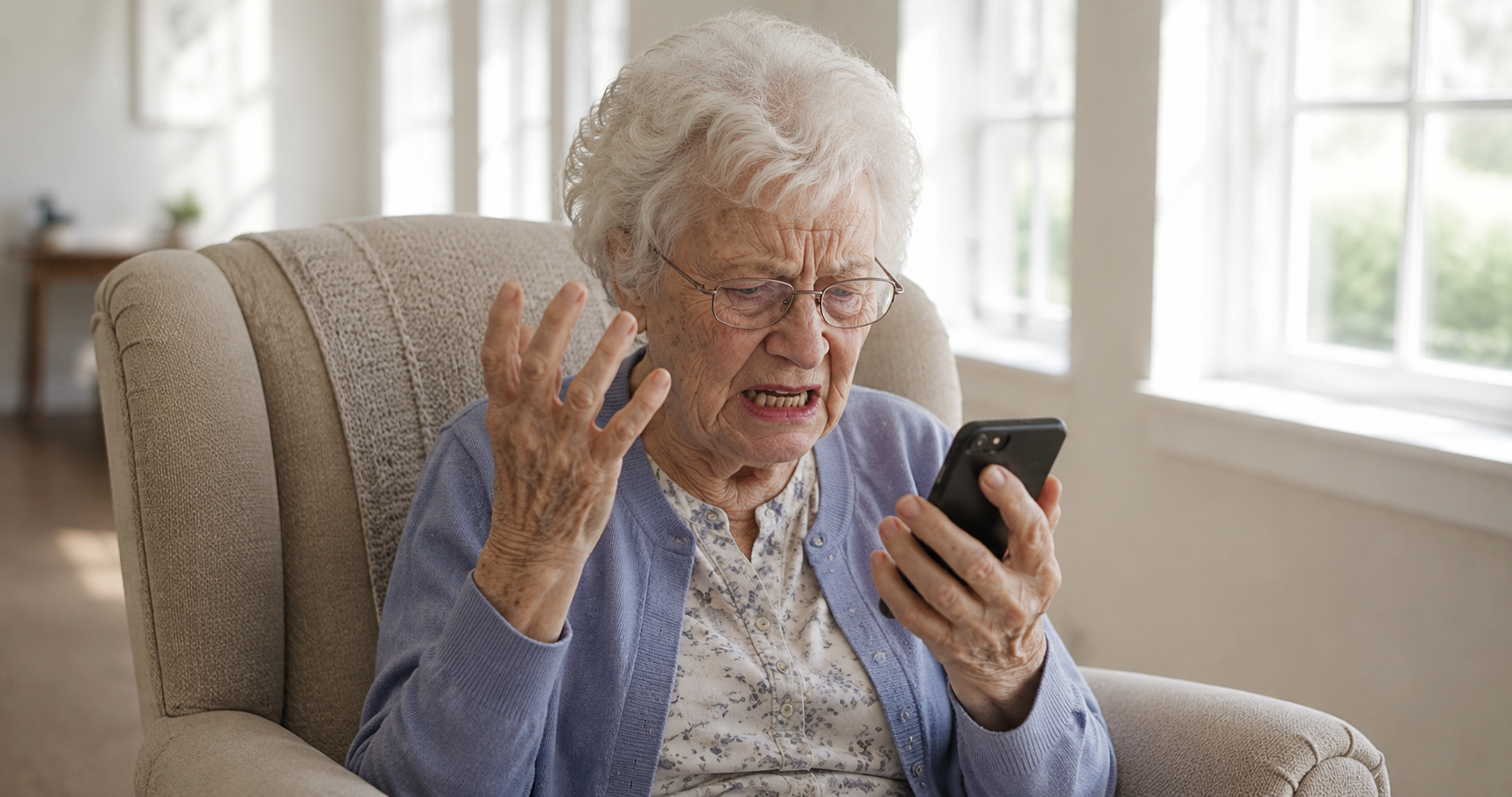
Most smartphones were designed for tech-savvy users. For elderly people, every small task — reading an SMS, making a call, setting a reminder — becomes a source of frustration and anxiety.
ElderBuddyCare turns a simple phone into a fully voice-controlled AI companion. No apps to open. No buttons to hunt for. Just talk.
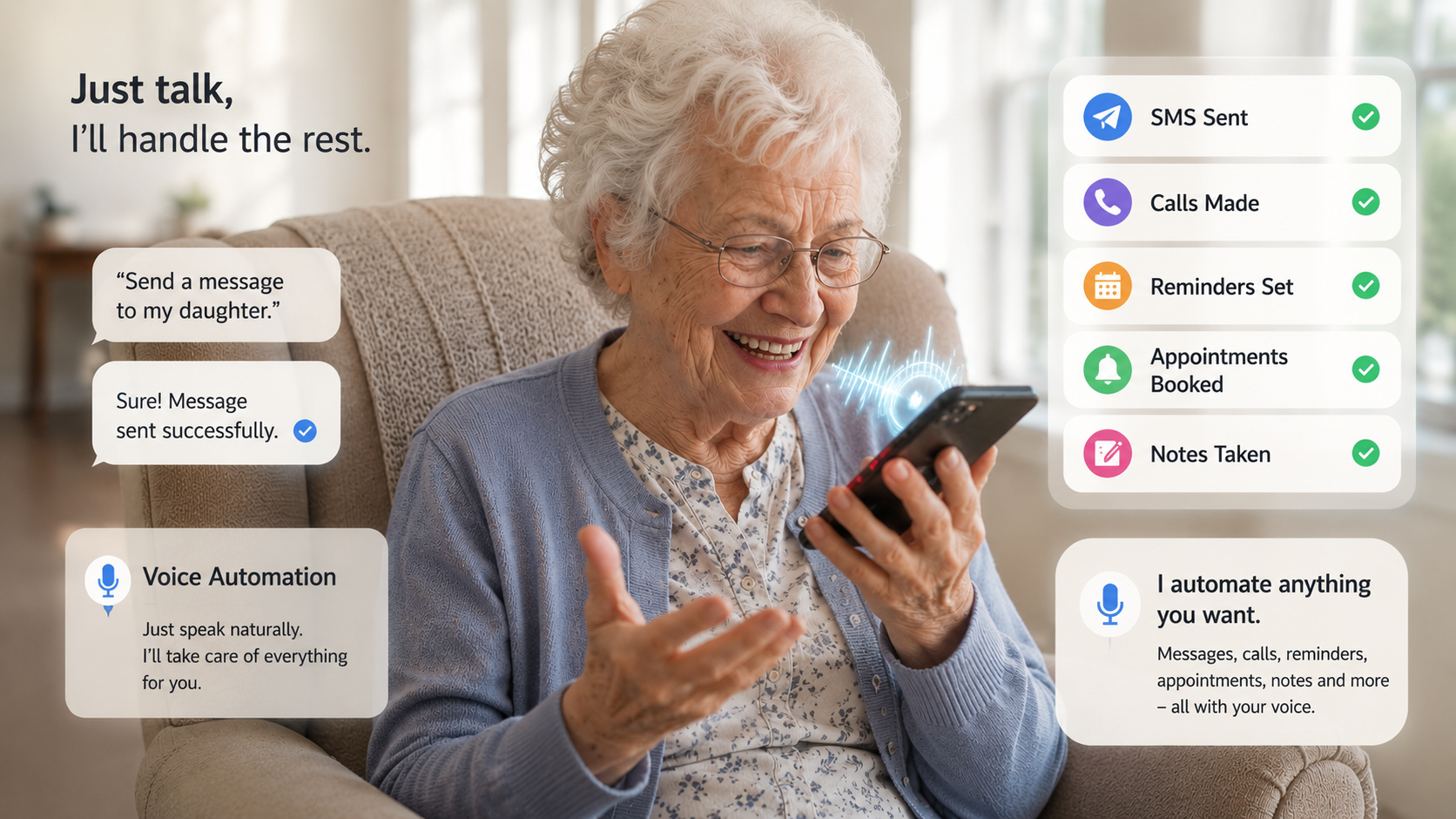
Designed for elderly people who want independence — and families who want peace of mind.
One big button. Your loved one speaks naturally and ElderBuddy answers in a warm, clear, unhurried voice.
"Wake me at seven" or "remind me to take my pills" — set by voice, with no menus and nothing to fiddle with.
Pill reminders at the right times. The phone gently asks if it was taken and records the answer for the family to see.
Every morning the phone says good morning, states the time, shares the weather, reads the news, and suggests a meal.
One tap or a spoken word instantly alerts the family. No menu to navigate, no password to enter.
Follow any number of loved ones from one simple dashboard — online and battery status, conversations, and check-in history.
No app store. No tech support calls. No confusing setup steps for the elderly person.
It comes fully prepared — nothing to install or set up on the device itself.
Enter their name, language, and a few preferences in the family dashboard.
Hand it over. One press of the big button and ElderBuddy is listening, talking, and caring.
Less than three hours of home care a month. No contracts — cancel anytime.
Annual billing = 2 months free · No contract, cancel anytime.
Open the family dashboard to add your first loved one right now.
Open Admin DashboardElderBuddy’s on-device voice recognition builds on modern speaker-verification research — it learns a compact “voiceprint” for each person so the phone can tell who is speaking, not just what was said.

ArcFace angular-softmax loss. The model learns to pull each person’s voice embeddings tightly together and push different people apart on a hypersphere — the additive margin m forces a strict, confident separation between speakers.

Cosine similarity. Any two voice samples are compared by the angle between their embeddings — a smaller angle means it’s more likely the same person.

Enrollment match. A new sample is accepted as the enrolled speaker only when its similarity clears a threshold τ — so the companion responds to the people it cares for.
Speaker-verification approach after Deng et al., “ArcFace: Additive Angular Margin Loss.”
A small team obsessed with keeping your loved ones safe, connected, and never alone.